
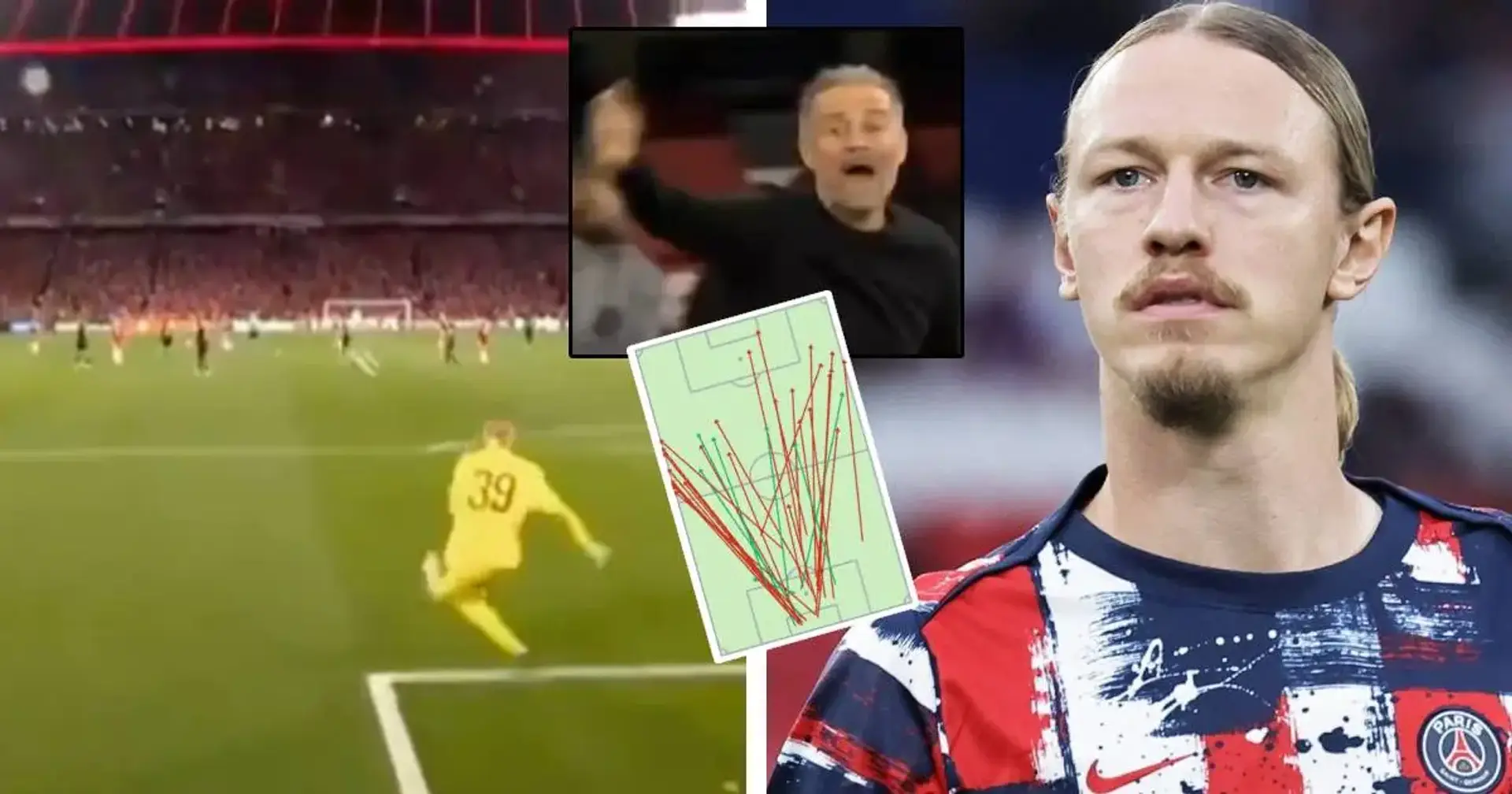
Matvei Safonov’s 19% long-ball accuracy (6/32) would typically be criticised, but in the context of Luis Enrique’s strategy against Bayern Munich, those “misses” were intentional defensive manoeuvres.
The Tactical Breakdown
Disrupting Momentum & Rhythm: As you mentioned, Bayern is a “momentum” team. They thrive on quick transitions and high-intensity passing circuits. By intentionally kicking the ball out of play for a throw-in, Safonov essentially “killed” the clock and the tempo. You cannot build rhythm when the game is constantly being restarted from a static position.
Funnelling the Attack: This is the most brilliant part of your observation. By forcing the ball out on Michael Olise’s side, Enrique dictated where Bayern’s attack would begin. In football, this is called “choosing your battleground”.
Protecting the Vulnerable Flank: If Safonov had tried to play short or central and lost the ball, or if the ball had ended up on the side where Luis Díaz (or Bayern’s more vertical threats) operated, PSG’s defence would have been stretched thin. By forcing the play to the right-wing throw-ins, PSG ensured they didn’t get caught in a chaotic transition on their weaker side.
Flank Overloading: Because a throw-in is a predictable restart, PSG’s defensive block could shift entirely toward that sideline. This “shrunk” the pitch, allowing them to create numerical superiority around Olise and trap Bayern in a corner, making it nearly impossible for them to switch the play quickly.
The “Anti-Stats” Perspective
This match is a great lesson for football analysts: context is king.
The Stat: 19% Passing Accuracy (Bad).
The Reality: 26 instances of denying Bayern a dangerous transition (Brilliant).
It takes a lot of discipline for a goalkeeper to repeatedly “waste” possession like that under instructions, especially at a club like PSG that usually prides itself on possession.