
When we look at our reflection in a mirror, something strange catches our attention. We see ourselves, yet somehow we do not see ourselves completely. Our face, our eyes, our smile, the way we part our hair—all of it is familiar. And yet, in the mirror, our right becomes our left. The same person, but somehow different.
It makes you wonder: does every human being live with a kind of split personality? Or do people actually change?
I once came across a line: “When a person dies, they remain; when they live, they change.” Death brings life to a stop, but life constantly rewrites us. Sometimes it is tragedy, sometimes success, sometimes unfulfilled dreams, and sometimes a kind of love we never expected. All of these experiences gradually turn us into another version of ourselves.
Perhaps we do not really change. Perhaps another person hidden within us simply begins to emerge with time.
Psychologist Carl Gustav Jung introduced two fascinating concepts when explaining human personality: the persona and the shadow. The persona is the face we show to the world. The shadow is the person we keep hidden within ourselves. Jung believed that multiple aspects of the self can coexist within a person. Time, experience, relationships, and emotions determine which side comes forward and when.
Interestingly, the Eastern philosophy of Yin and Yang says something similar. There is no complete light, nor is there complete darkness. Even within light, there is a point of darkness; and within darkness, there is always some light. Perhaps human beings are the same.
We are not one-dimensional. We can be harsh and gentle, ruthless and compassionate, arrogant and vulnerable at the same time. It is simply a matter of time before we discover which version of ourselves will step onto the stage of life.
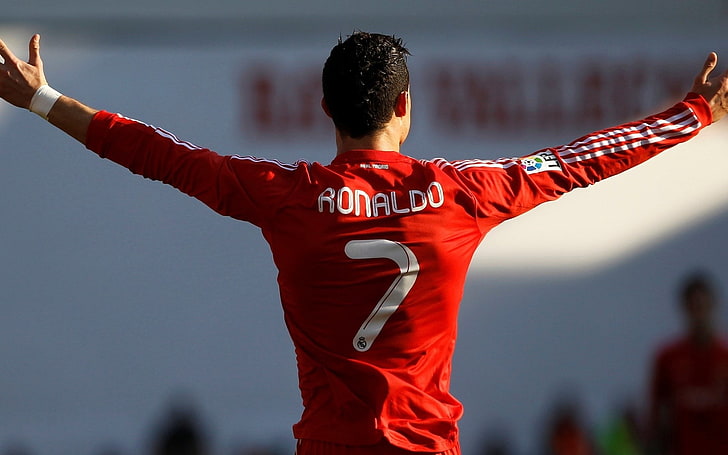
That is why, to me, Cristiano Ronaldo’s career has never been merely a story of goals, trophies, Ballon d’Ors, or records. To me, it is the story of a man’s evolution—the story of two different identities living within the same person.
If I look at his entire career beyond the statistics, successes, and failures, I see a clear division: pre-2018 and post-2018.
This division is not about statistics or a change of club. It is about the evolution of a person’s personality. It is almost as if the same writer wrote two completely different novels about the same character at two different points in time.
In the first novel, the hero wants to win the war.
In the second, he begins to understand that even after winning the war, there are still battles left to fight within himself.
Pre-2018 Ronaldo was flamboyant, aggressive, almost theatrical. He stepped onto the pitch not to be loved, but to establish dominance.
There are players who want respect, applause, and even love from their opponents. When you look at Ronaldo’s Manchester United or Real Madrid career, did you ever feel that way about him?
I never did.
Instead, I always felt that he wanted his opponents to hate him. Because hidden inside that hatred was fear.
Maybe my interpretation is wrong. After all, none of us can know for certain what was going on inside another person’s mind. Ronaldo himself never claimed that his philosophy of life changed after 2018.
So I am not presenting an absolute truth. I am writing as a long-time observer, sharing my interpretation and my feelings.
I do not see football merely as a sport. I also see it as a way of understanding human character. And from that perspective, Ronaldo’s career repeatedly reminds me that sometimes the greatest changes in a person cannot be found in statistics. They can be seen in the language of their eyes, their body language, their decisions, and the way they express emotion.
The Ronaldo we see today has won five Ballon d’Ors, is regarded as one of the greatest goalscorers in history, and has collected countless trophies.
But that is not where the story begins.
The story begins in a small house in Madeira.
Limited income, financial uncertainty, and an unclear future were part of his childhood reality. His mother, Dolores Aveiro, later wrote in her autobiography that, because of severe financial difficulties, she once considered having an abortion.
Perhaps one of life’s cruelest ironies is that the child who was once uncertain to even enter this world would eventually become one of the most recognizable athletes on the planet.
But life still did not give him an easy path.
At just twenty years old, he lost his father, José Dinis Aveiro. His father had witnessed his son’s talent, but left this world before seeing the full extent of his greatness.
Think about that for a moment.
When the greatest achievements of his life finally arrived, the man he might once have wanted to tell, “Dad, I did it,” was no longer there.
Psychology has a concept called attachment. Security, affection, loss, and relationship experiences during childhood can deeply influence a person’s emotional structure later in life.
I am not saying that every decision Ronaldo has ever made can be explained through this concept. Such a claim would neither be scientifically sound nor fair.
If I had to explain the Cristiano Ronaldo before 2018 in one sentence, I would say this:
He was not looking for love. He was looking for dominance.
He wanted opposing fans to fear him.
In modern football, we often see stars trying to earn respect, applause, and acceptance even from opposing supporters. They want everyone to admire them.
Ronaldo seemed to follow a completely different philosophy.
The love of his opponents had little value to him. Instead, it often seemed as though he wanted them to hate him, because he understood very well that hatred can sometimes be another form of fear.
At Camp Nou, Anfield, or any hostile stadium, thousands of boos, insults, and jeers did not seem to stop him. If anything, they made him sharper.
He once said, “Your love makes me stronger, your hate makes me unstoppable.”
To me, that single sentence captures the mentality of his early career. He seemed to believe that love could make a person stronger, but hatred could make him unstoppable.
That is why Ronaldo’s presence on the pitch was not merely technical; it was psychological.
He did not simply score goals. He could disrupt the psychological balance of his opponents.
Football has a term for this: psychological warfare.
It is the art of making an opponent believe, even before the match begins, that tonight does not belong to them.
Ronaldo was one of the greatest practitioners of that art.
His walk, his posture, his gaze, his goal celebrations—everything carried a sense of dominance. Many people called it arrogance.
I would call it his competitive identity.
He seemed to deliberately present himself in a way that could make his opponents feel psychologically one step behind before the first whistle had even been blown.
His reactions to controversial refereeing decisions, offsides, missed penalties, or hard tackles were often intense. Many supporters found those reactions irritating. Some accused him of being overly dramatic.
But I always saw them differently.
To me, they were part of the process through which he kept the fire inside himself burning. He did not seem to suppress his anger. Instead, he turned it into fuel.
His arrogance was not merely a personality trait. It was part of the fuel behind his performance.
One widely discussed concept in sports psychology is the Yerkes-Dodson law. It suggests that there is a relationship between performance and psychological arousal. But the interesting part is that the ideal level of arousal is not the same for everyone.
Some people perform best when they are completely calm. Others reach their best form when they are under intense pressure, anger, frustration, or the urge to prove themselves.
Every elite performer has an individual optimal-arousal zone.
My personal observation is that Ronaldo’s zone seemed to emerge from hostility, pressure, boos, and challenges from his opponents.
The bigger the match, the bigger Ronaldo seemed to become.
The more hostile the environment, the more dangerous he appeared.
Perhaps that is why he repeatedly seemed like a different player in Champions League knockout matches, El Clásicos, and major international games.
It was almost as though pressure was not something on his shoulders.
Pressure itself was his weapon.
And this brings me to another psychological concept: Self-Determination Theory.
This theory suggests that the sources of human motivation can change over time. Some people draw strength from external recognition, competition, and achievement, while others gradually begin to place greater value on relationships, connection, and emotional satisfaction.
I am not claiming that this definitely happened to Ronaldo.
But when I look at the two chapters of his career, it seems to me that the center of his motivation in the first chapter was winning, dominance, and proving himself.
It was not about how the world viewed him.
It was about how he could defeat the world.
Perhaps to understand the roots of this mentality, we need to return once again to his childhood.
That small house in Madeira, financial hardship, his mother’s struggles, and the early death of his father may have taught a young boy very early that the world gives nothing away without a fight.
A child who experienced uncertainty even before birth, and a young man who lost his father at twenty, could naturally develop a certain survival mentality.
Perhaps that is why, in Ronaldo’s eyes, football was never merely a game.
It was a battle to prove his existence.
Every goal seemed like an answer to the world.
Every trophy seemed like a personal victory against the poverty, humiliation, and limitations of his past.
That is why I still say that, to me, Ronaldo from 2003 to 2018 was not simply a footballer.
He was a fear factor.
He was someone whose very presence created psychological pressure for his opponents.
His stepovers, his gaze, his celebrations, his protests—all told the same story.
He did not merely want to win matches.
He wanted to break the confidence of his opponents as well.
But every person experiences certain moments in life that may not immediately change them, yet make an ongoing transformation within them visible.
Psychology sometimes refers to such moments as emotionally significant events—experiences that force people to reconsider their identity.
For me, the symbolic moment in Cristiano Ronaldo’s life came in Turin.
The Allianz Stadium.
A bicycle kick.
And something even greater than the goal itself: applause from the opposition.
April 3, 2018.
Champions League quarter-final.
Opponent: Juventus.
Allianz Stadium, Turin.
People still talk about that match.
But strangely, as the years have passed, the most important moment of that night for me is no longer the bicycle kick.
The goal was undoubtedly one of the greatest goals in football history. The balance, timing, athleticism, and technique combined to create something almost impossible.
But to me, the few seconds after the goal became even more significant.
Because in those few seconds, a scene unfolded that could almost serve as a symbol for Ronaldo’s entire career.
His team had just conceded.
The stadium should have gone silent.
The supporters should have exploded with anger.
But instead, thousands of Juventus fans stood up.
And they applauded.
An opposing footballer.
Cristiano Ronaldo.
Such a moment is rare in football.
We respect opponents, but a standing ovation? Especially during a Champions League knockout match?
This was more than simple admiration.
It was the audience surrendering, in silence, before a masterpiece.
I am not saying Ronaldo changed that very night.
People do not change like that.
Personality is not a switch that suddenly turns from on to off.
But psychology speaks of emotionally significant events—moments that do not necessarily change a person themselves, but open a door to changes that have been developing inside them for a long time.
It is like opening a window in a room that has been closed for years.
The light does not suddenly appear.
The light was already outside.
It simply gets a chance to enter.
To me, that night in Turin was something like that.
I have asked myself the same question many times:
What was happening inside the man who had spent nearly fifteen years turning the hostility of opposing fans into strength when, for the first time, he received unconditional admiration from the opposition?
We do not know.
And there is no way for us to know.
But sometimes certain emotions cannot be expressed through words. They can only be seen in someone’s eyes.
The look of surprise on Ronaldo’s face that night seemed more significant to me than the joy of the goal itself.
It was the surprise of a man who had spent his entire life winning battles, only to realize for the first time that there is another kind of victory beyond winning a war.
Maybe that interpretation is exaggerated.
Maybe it is not.
But from that point onward, I gradually began to see another Ronaldo.
The psychological theory of Socioemotional Selectivity, proposed by Laura Carstensen, suggests that people’s preferences can change as they grow older.
When people are young, they tend to focus more on achievement, competition, the future, and establishing their position in the world.
But with time, people begin to understand that achievement is not everything.
Meaningful relationships, emotions, family, love, and peace of mind become much more valuable.
I am not claiming that this exact theory explains Ronaldo.
But his life sometimes seems like a strange reflection of it.
Once, he wanted to conquer the world.
Later, he seemed to begin searching for a connection with it.
Once, the boos of opposing fans seemed to be adrenaline.
Later, applause seemed to become emotion.
And this is where I first began to notice a subtle identity reconstruction in Ronaldo.
If a person spends their entire life seeing themselves only as a warrior, then every decision, reaction, and emotion becomes centered around that identity.
But eventually, when that person adds new identities to himself—a father, a partner, a senior leader, a legend—his way of expressing emotion can also change.
That is not weakness.
Sometimes, it is simply the expansion of a person’s identity.
Still…
As a Ronaldo supporter, I have a personal confession.
I never completely accepted that change.
Maybe that is my mistake.
Maybe it is simply nostalgia.
But I kept looking for the old Ronaldo.
That arrogant, flamboyant Ronaldo.
The one who would look into an opponent’s eyes and smile.
The one who believed the world was against him.
And then defeated that very world.
This feeling struck me deeply a few months later, when Ronaldo was wearing the Juventus shirt.
Champions League match against Valencia.
His first European match for Juventus.
A controversial red card.
Even today, many people believe it was not a red-card offense.
But my attention was never fixed on the referee’s decision.
It was fixed on Ronaldo’s face.
He sat down.
Then he cried.
Heavily.
That scene made me uncomfortable.
Because the Ronaldo of 2016 or 2017 was still very clear in my mind.
I believe that version of Ronaldo would have turned the entire stadium upside down after such a decision. He would have argued with the referee. His body language would have screamed, “You got it wrong.”
But that night in Juventus, I felt as though I was watching a different person.
Many people will say, “That is maturity.”
And perhaps they are right.
But as a fan, I admit that I could never completely connect that so-called mature reflection with the Ronaldo I had known.
Because to me, Cristiano Ronaldo’s greatest weapon was never simply his right foot.
Nor was it his leap.
Nor was it his finishing.
His greatest weapon was his arrogance.
His aggression.
His almost unshakable belief that nobody in the world could defeat him.
I know many people will disagree with me.
But as a supporter, I have always felt that Ronaldo’s arrogance was not a character flaw.
It was his superpower.
And when that fire slowly began to soften…
perhaps the Ronaldo on the pitch began to change as well.
Ronaldo did not change overnight after that night in Turin.
People do not change that way.
Personality change is rarely the result of a single moment. It is usually a long process built layer by layer through experiences, relationships, age, achievements, and disappointments.
Yet when I look at Ronaldo after 2018, I repeatedly feel as though he entered another chapter of his life.
Before, he fought against the world.
Now, he seemed to be searching for a place within it.
Before, his identity was centered almost entirely around being a winner.
Gradually, other identities became part of him—a father, a partner, a family man, a senior leader.
Psychology often refers to this as identity reconstruction: the process through which a person begins to redefine their sense of self, potentially changing the way they make decisions, experience emotions, and respond to situations.
I am not claiming that this is exactly what happened to Ronaldo.
But as a long-time observer, that is how his transformation has appeared to me.
Another part of this change was his personal life.
The man who was once frequently surrounded by media speculation about relationships has, for nearly a decade, built a stable family life with Georgina Rodríguez.
Today, Ronaldo’s social media frequently shows his family, children, birthdays, holidays, and small moments spent together.
To many people, this may seem completely normal.
But to me, these moments reflect a change in a person’s priorities.
Socioemotional Selectivity Theory suggests that as people grow older, they may begin to value meaningful relationships in the present more than the endless possibilities of the future.
Competition, ambition, and achievement gradually begin to share space with family, love, security, and emotional connection.
From the outside, Ronaldo’s life sometimes seems to reflect that journey.
Then came 2021.
One of the most talked-about transfers in football history.
At the time, reports suggested that a move to Manchester City was highly likely. Pep Guardiola’s team was one of the most mature projects in European football, and on paper, it may have been the most logical destination for winning more trophies.
But Ronaldo ultimately returned to Old Trafford.
To the club where he had transformed from a teenager into a global superstar.
The place where Sir Alex Ferguson had shaped him not only as a footballer but also as a person.
How much of that decision was about football and how much was about emotion, we cannot know for certain.
But from the outside, it seemed to me that this was not merely a career decision.
It was a decision driven by memories, relationships, gratitude, and the heart.
Perhaps the younger Ronaldo would not have made that choice.
Perhaps the Ronaldo of 2009 or 2014 would have chosen the strongest project available.
But the Ronaldo of 2021 seemed to be answering a different question:
“Where do I feel most at home?”
Unfortunately, football does not always reward emotion.
The return to Old Trafford, which many people imagined would be the fairy-tale final chapter, soon became a story of misunderstandings, conflict, and disappointment.
His performances, his relationship with the coach, and the instability within the team all contributed to the return losing its dream-like quality.
Sometimes I feel that this is one of life’s cruelties.
The man who spent his entire life putting emotion aside and chasing logic and victory finally made a few decisions with his heart—and football did not reward him the way it once had.
Another thing from this period deeply affected me: the way Ronaldo expressed emotion.
In recent years, we have seen him cry over relatively small achievements, become visibly overwhelmed after missing less significant penalties, and carry personal grief with the vulnerability of an ordinary human being.
The loss of his newborn son, in particular, was not simply the tragedy of a footballer. It was the heartbreak of a father.
At that moment, even one of the greatest footballers in history could no longer hide behind records, goals, or trophies.
Perhaps that is why I no longer see today’s Ronaldo the way I used to.
In the biggest moments of the past, I saw hunger in his eyes—the hunger to destroy his opponent.
Now, I often see pressure, responsibility, and the weight of his own expectations.
Some may call it age.
Some may call it maturity.
Others may simply call it a natural human transformation.
The biggest changes in a person’s personality often arrive without making a sound.
They are not announced at a press conference.
They do not appear in statistics.
Sometimes, even the person themselves may not realize they are changing.
Change happens slowly—in reactions, decisions, expressions, and silences.
That is how Ronaldo’s transformation has appeared to me.
He did not stop scoring goals.
He did not stop wanting to win trophies.
But the language of his inner battle seemed to change.
Once, he played by challenging the world.
Later, it seemed as though he had learned to make some kind of peace with it.
And sometimes, our greatest strength can eventually become our greatest weakness.
Sports psychology also has a concept called cognitive appraisal.
In simple terms, the way we interpret a situation influences our emotions and behavior.
The young Ronaldo seemed to interpret every boo, criticism, and act of disrespect as a personal call to battle.
Naturally, his response was aggressive.
But if a person gradually begins to value acceptance more than criticism, they may experience the same event differently.
I am not claiming that this is exactly what happened to Ronaldo.
But as a viewer, I have sometimes felt that the center of his psychological world was gradually shifting—from fear toward acceptance, from dominance toward connection.
Perhaps that is why we have seen him become more emotional in recent years.
Ronaldo standing with his head down after missing a penalty.
Ronaldo with tears in his eyes during important moments.
Ronaldo unable to hold back tears even after winning a relatively small trophy.
These scenes feel new to me.
I am not saying he never cried before. He cried after being injured during the Euro 2016 final, and that too was an expression of emotion.
But his emotions in recent years seem different.
In the past, I saw frustration in his tears—the frustration of losing a battle.
Now, I sometimes see vulnerability.
Perhaps age frees people from feeling the need to hide their emotions.
Or perhaps, after a long struggle through life, people eventually understand that being strong and being emotionless are not the same thing.
Still, as a supporter, one question keeps returning to me.
If Ronaldo’s greatest strength truly was his relentless aggression, stubborn confidence, and mentality of fighting against the world, did the change in that mentality subtly affect his football?
I do not know the definitive answer.
And perhaps nobody does.
But if we return to the Yerkes-Dodson law, at least one thing becomes understandable: some athletes’ highest levels of performance depend on a particular level of psychological arousal.
If the nature of that internal fire changes, the style of performance may change as well.
I am not presenting this as a scientific conclusion, but as the observation of someone who has watched him for years.
To me, it sometimes seemed that during Ronaldo’s later career, his physical ability remained extraordinary, but his psychological fuel had also changed.
He still wanted to win.
But the hunger to defeat the world did not seem quite as fierce as before.
This is what makes me think the most.
Because we often assume that the more human a person becomes, the better they become.
Reality is not always that simple.
Many extraordinary artists, scientists, and athletes in history possessed intense qualities that may have made them difficult in their personal lives, yet those same qualities fueled their greatness.
With Ronaldo, I have sometimes felt that his arrogance, self-centeredness, and relentless stubbornness may have taken him to heights that ordinary talent could never reach.
And when that intensity gradually softened, perhaps he became more mature as a human being.
But the ruthless warrior of football changed as well.
There is a strange paradox here.
We all want our favorite players to be good people.
At the same time, we want them to be ruthless on the pitch.
We want them to be responsible toward their families, yet during ninety minutes of football, we want them to see nothing but victory.
But can a person really separate their emotions so completely?
The person who is learning to accept love away from the pitch, making family the center of his life, and no longer hiding from grief—can that same person remain as ruthless on the pitch as before?
Maybe.
Maybe not.
But the question remains with me.
Perhaps that is why I now see Ronaldo’s career in two parts.
In the first part, there was a man who believed:
“The more you hate me, the more unstoppable I will become.”
In the second, I see a man who may have realized that life’s greatest achievements cannot always be placed inside a trophy cabinet.
Some achievements exist around a family dining table.
In the laughter of a child.
Or in a stadium where the opposition once stood up and applauded you.
In the end, I feel that this piece is not really about Cristiano Ronaldo.
It is about people.
Because Ronaldo is simply a character through whom we may be able to see ourselves.
At some point in life, we all live as two different people.
One fights against the world.
The other wants a little shelter from it.
One wants to prove what they are capable of.
The other wants to be loved not for their achievements, but simply for who they are.
Perhaps these two people are never truly separate.
They always live inside the same body.
Time simply decides which one comes forward.
I often return to the image of the mirror from the beginning.
In a mirror, we see ourselves, but not exactly ourselves.
Right becomes left.
Left becomes right.
The reflection is familiar, yet different.
Perhaps human life is the same.
We think we are still the same person.
But the person we were ten years ago is not the person we are today.
That difference is often invisible from the outside.
It can be seen in our decisions, priorities, reactions, and in the way we define love.
When I look at Cristiano Ronaldo’s career, I feel that the key word of his first chapter was fear.
He was a footballer whom opponents did not simply want to stop—they feared him.
He stepped onto the pitch and changed the psychological balance of the match through his presence alone.
His body language, his gaze, his celebrations—everything carried a message.
As if he were saying:
“I am not here merely to win. I am here to break your belief in yourself.”
He never seemed interested in being everyone’s favorite.
He wanted to be everyone’s worst nightmare.
But in the second chapter, the word seems to have changed.
Fear gradually gave way to love.
Again, I am not saying this is a proven fact. It is simply the long-term observation of a supporter.
To me, it seemed that at some point in his life, Ronaldo began to understand that receiving people’s love could itself be a form of achievement.
Perhaps the applause in Turin was the symbol of that realization.
Perhaps his family was its real-life expression.
Perhaps returning to Manchester United was another manifestation of that emotion.
And perhaps the personal tragedies of his life softened him further.
We cannot know for certain.
But perhaps understanding a person does not always require absolute certainty. Sometimes, long observation is enough to create a feeling.
The biggest question, however, lies elsewhere.
Did this transformation change his football?
I am not sure.
But I do know this:
For some players, talent does not exist only in their feet. It also exists in their personality.
Diego Maradona’s chaos, Zlatan Ibrahimović’s arrogance, Michael Jordan’s ruthless competitiveness—these qualities cannot be completely separated from their greatness in sport.
They were part of their talent.
My personal feeling is that Ronaldo was no different.
His arrogance, his relentless determination, his mentality of declaring war against the world—these qualities helped create the Ronaldo we saw in 2008, 2011, 2013, 2014, 2016, and 2017.
So when the man began to change, perhaps the footballer also changed in subtle ways.
And perhaps that is simply the natural rule of life.
Because people do not only win.
People do not only lose.
People change.
And sometimes, the value of that change is greater than any trophy.
If someone asked me today which Ronaldo I prefer—the Ronaldo of the first chapter or the second—I would say:
I love both versions of Ronaldo.
But if they asked me which Ronaldo I would want to see one last time…
I would probably choose the first Ronaldo as a footballer.
That arrogant, flamboyant, fear-driven warrior who turned the boos of opposing fans into fuel, who would explode over an unfair decision, who wanted to conquer the world’s respect rather than seek its love.
But as a human being?
I have a deep respect for the second Ronaldo as well.
Because he reminds me that even legends are ultimately human.
They grieve.
They love.
They make wrong decisions.
They break down.
And perhaps that is their greatest human beauty.
In the end, I feel that the greatest contradiction in Ronaldo’s career is not hidden in his goal tally, his Ballon d’Ors, or his number of trophies.
It is hidden in his personality.
The man who once conquered the world because he believed he did not need its love may have eventually learned, in the final chapter of his life, the value of being loved by that same world.
And that is where this story stops being merely a story about football and becomes a story about being human.
Maybe this is what aging is.
Maybe this is what life is.
Because time does not only take away our speed.
Time changes our preferences too.
And perhaps the greatest tragedy of being human is not that we change.
Perhaps it is that, sometimes, our greatest version and our most peaceful version can no longer be the same person.