
History doesn’t always belong to the winners on the scoreboard. Sometimes, it belongs to those who dare.
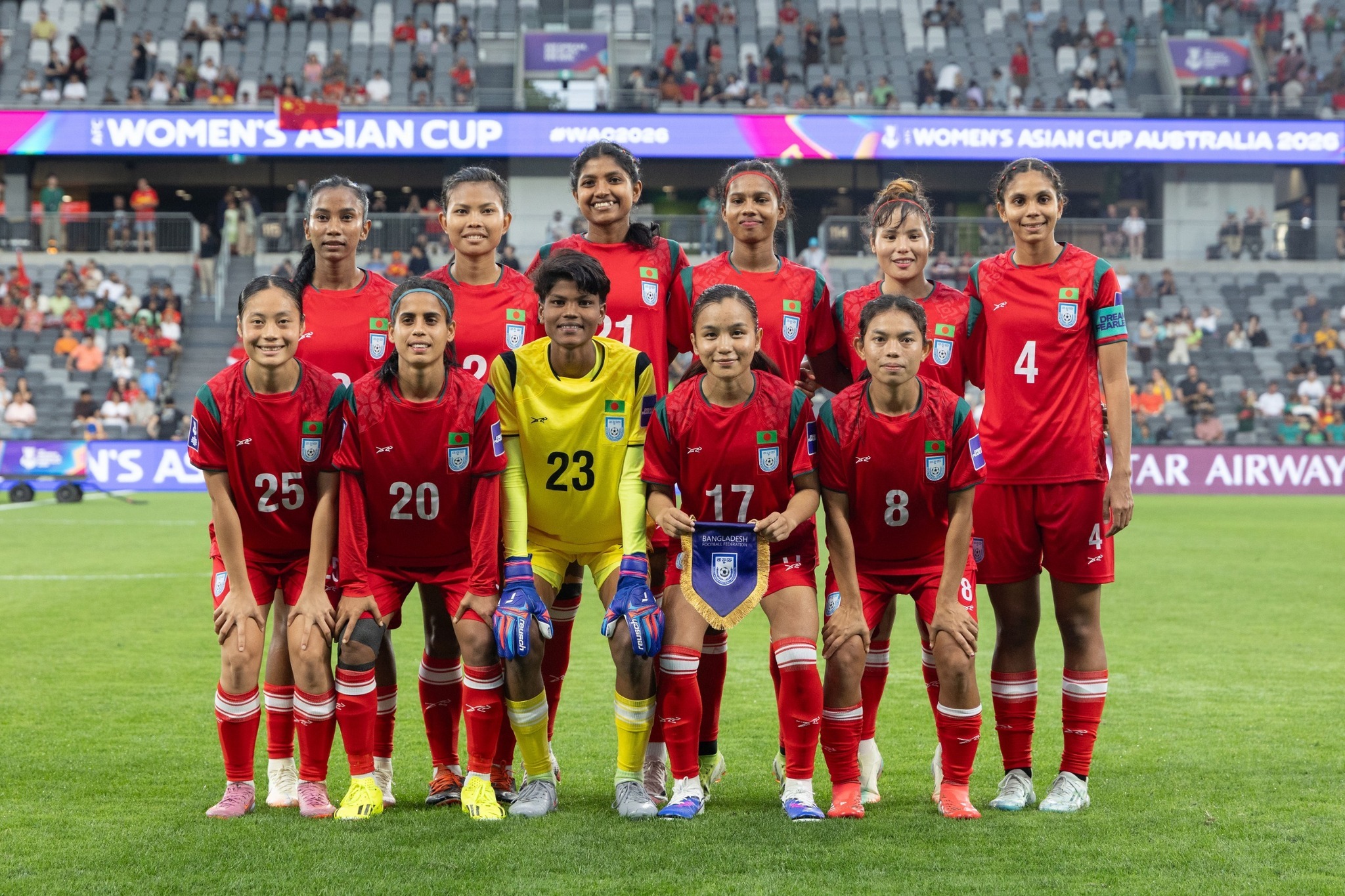
Bangladesh stepped onto the grand stage of the AFC Asian Cup and announced themselves to Asia—not with points, not with goals, but with courage. Facing defending champions China PR women’s national football team in their opening match, Bangladesh may have lost 2–0, but the story was far bigger than the scoreline.
And anyone who watched the game knows it.
A Moment Bigger Than Football
As the players walked through the tunnel, Afida was seen quietly murmuring to herself. Maybe it was a prayer. Maybe it was a whisper of belief. When you’re about to face one of Asia’s most dominant sides in a tournament featuring 12 of the continent’s best teams, you hold on to whatever calms your heartbeat.
When the national anthem played, Bangladeshi fans in the stands sang with everything they had. It felt like they were lending their lungs, their strength, their spirit to the team.
And the players responded.
Early Nerves, Then Courage
Bangladesh understandably felt early pressure. It wasn’t unexpected. China PR, stacked with experienced players—many in their mid-to-late 20s and seasoned in Asian Cups and World Cups—controlled possession early on.
But Bangladesh didn’t collapse.
They looked China in the eye.
Coach Peter Butler made bold decisions, including a surprise in goal. Instead of the more familiar name, he started Mili Akter. Naturally, eyebrows were raised. In a tournament of this magnitude, experimenting with a goalkeeper can be risky.
But Mili delivered.
From her early near-post claim off a corner to multiple confident saves in open play, she proved the coach right. She wasn’t perfect—no goalkeeper is—but she was brave, composed, and reliable. That healthy competition in the squad might be one of Bangladesh’s long-term strengths.
The Goals: Quality Over Mistakes
Let’s be honest. Bangladesh didn’t concede because they were naive. They conceded to quality.
China’s opening goal, scored by their No. 7, was a moment of class. Sometimes, there’s simply nothing you can do against technical brilliance.
The second goal came after a deflection and a chaotic sequence inside the box. Afida tried. The defense tried. But the ball crossed the line. That’s football.
What matters is this: Bangladesh weren’t outplayed. They were out-finished.
The Ritu Moment
If there was one flash that truly electrified the stadium, it came from Rituparna Chakma.
Her explosive run, her sharp movement, and her powerful shot forced a high-quality save from China’s experienced goalkeeper—a player who has performed on the biggest Asian and global stages.
Maybe others didn’t expect Ritu to take that shot.
But Bangladesh did.
And Ritu did.
Big-match players reveal themselves in big moments. She reminded everyone why she matters so much to this team.
Tactical Evolution: The Three-Back Gamble
One of the most impressive aspects of the game was Bangladesh’s tactical shift.
Traditionally more comfortable in a back-four system, they switched to a three-back formation for this match. That’s not a small change. It demands positional intelligence, fluid movement, and trust.
They adapted.
Midfielders Maria and Monika were outstanding—disciplined, composed, and competitive. Even in possession metrics, Bangladesh held their own. At one point, they maintained 41% possession against a regional powerhouse. The passing difference wasn’t massive either.
This wasn’t survival football.
This was resistance with intent.
The “What If” Factor
There’s one unavoidable thought.
What if Bangladesh had played more competitive matches in the two months leading up to the tournament?
What if they had faced even a mid-tier international opponent to fine-tune errors, sharpen coordination, and simulate pressure?
Preparation matters. And yet—even without ideal preparation—they stood tall.
Imagine what this team could become with proper build-up.
More Than a Loss
The final whistle blew: 2–0.
On paper, zero points.
In reality? A powerful statement.
After the match, the players walked toward their supporters. Fans stood, applauded, and some even moved down from the stands to greet them. The team left the pitch with heads high.
Because this wasn’t a team that came to “avoid humiliation.”
This was a young squad—many just 20 or 21 years old—who came to compete.
What’s Next?
Bangladesh now faces North Korea women’s national football team (DPR Korea), a side known for youth dominance and global pedigree. It will be another immense challenge.
But here’s the thing: Bangladesh now believes.
Even a single point could reshape the group standings. A strong result against Uzbekistan might open doors to something extraordinary—quarterfinals, Olympic dreams, maybe even a World Cup pathway.
The scoreboard said 2–0.
Asia learned something different.
This isn’t “Made in China.”
This is Made in Bangladesh—resilient, fearless, and just getting started.