
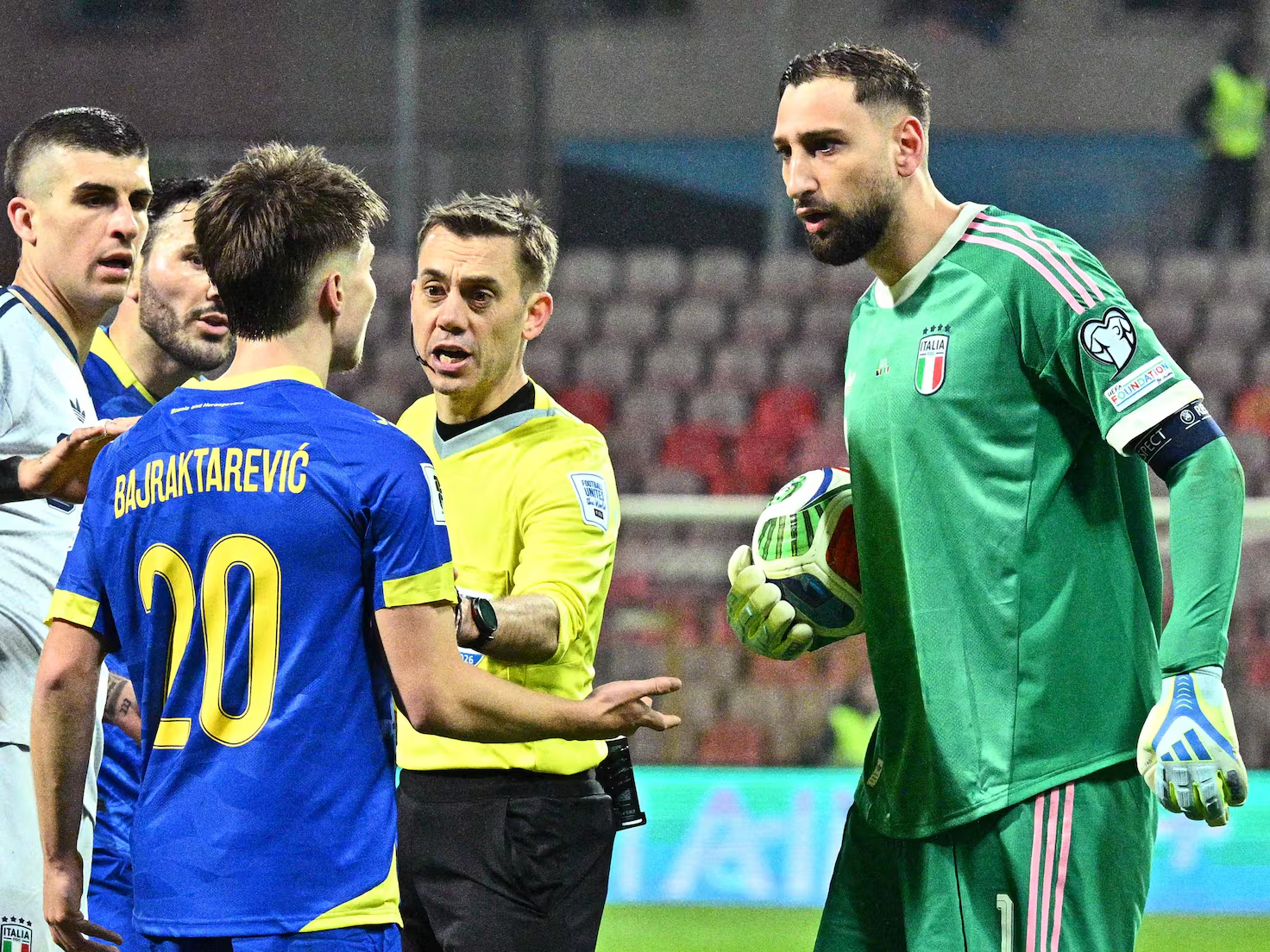
Football has always been a game of moments—some created by world-class players under stadium lights, and others born quietly on the sidelines, far from the spotlight. But every once in a while, a story emerges that blurs that line completely. This is one of those stories.
It was a tense night as Bosnia and Herzegovina national football team faced off against Italy national football team. The match had stretched into a nerve-wracking penalty shootout, the kind where every kick feels like it carries the weight of a nation. All eyes were on Italy’s star goalkeeper, Gianluigi Donnarumma—a player known for his composure, towering presence, and ability to read penalty takers like an open book.
But this time, he had a little extra help.
Tucked beneath his towel was a small piece of paper—a cheat sheet of sorts. On it were carefully noted tendencies of Bosnia’s penalty takers: who prefers the left, who goes right under pressure, who might try something unexpected. It’s a common strategy in modern football, where data and preparation often make the difference between glory and heartbreak.
Everything seemed under control.
Until it wasn’t.
A Disappearing Advantage
As the shootout progressed, Donnarumma reached for his towel, likely hoping to glance at the notes one more time. But something was wrong. The paper was gone.
At first, it may have seemed like a simple misplacement. Maybe it slipped. Maybe it fell. But no—after a quick search, it became clear: the note had vanished.
Without his prepared insights, Donnarumma stepped into the goal relying purely on instinct. The pressure mounted, each penalty becoming harder to predict, harder to stop. And in the end, against expectations, Italy lost the shootout.
It was a surprising result. But the real twist in the story was yet to come.
The Unexpected Hero
Later, footage from a Bosnian TV broadcaster revealed something no one had noticed during the match. In the background, moving almost invisibly among the chaos of the touchline, was a young ball boy—just 14 years old.
His name? Afan Sijmic.
The cameras showed him quietly approaching the area where Donnarumma had left his towel. With remarkable calmness, he slipped the paper out and walked away, as if nothing had happened.
No drama. No hesitation. Just a quick decision.
When asked about it later, Afan didn’t deny anything. In fact, his explanation was as simple as it was astonishing: “I saw a paper inside Donnarumma’s towel. I knew it probably had information about our players. So I removed it. He looked for it later, but couldn’t find it.”
That’s it. No elaborate plan. No second thoughts. Just pure instinct.
Genius or Mischief?
What Afan did sparked a wave of reactions. Some called it cheeky. Others labeled it unfair. But many saw something different—a flash of intelligence, awareness, and courage far beyond his years.
In a high-pressure environment filled with elite professionals, a teenager noticed a tiny but crucial detail—and acted on it.
That’s not just luck.
That’s presence of mind.
And in football, where margins are razor-thin, sometimes that’s all it takes.
From Ball Boy to “Lucky Charm”
As the story spread, it quickly captured public imagination. Fans began calling Afan a “lucky charm” for Bosnia. Social media buzzed with admiration, humor, and debate.
Even more interestingly, broadcasters and fans started suggesting something unexpected: that Afan should be taken along with the Bosnian squad to future tournaments, even as far as the World Cup in the United States.
Not as a player, of course—but as a symbol.
A reminder that football isn’t just about tactics and talent. It’s also about instinct, boldness, and those unpredictable moments that change everything.
The Beauty of Football’s Unscripted Moments
What makes this story so special isn’t just the outcome of a match. It’s the reminder that football is alive in every corner of the stadium—not just on the pitch.
Afan Sijmic wasn’t supposed to be the hero. He wasn’t trained for this moment. He didn’t have a coach guiding his decision.
And yet, when the opportunity came, he acted.
Whether you see it as clever gamesmanship or a controversial move, one thing is undeniable: it changed the game.
And maybe, just maybe, that’s what makes football the most beautiful sport in the world.